
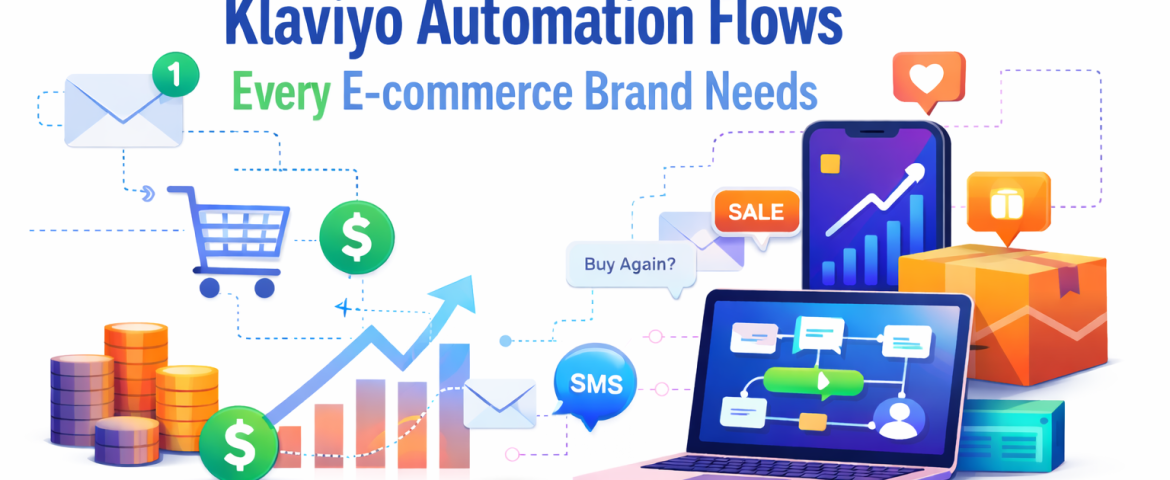
In today’s competitive online marketplace, running ads alone is no longer enough to scale an e-commerce brand. To consistently increase revenue and build long-term customer relationships, brands must rely on smart automation strategies. This is where Klaviyo automation flows play a critical role, allowing businesses to automate personalized email and SMS communication based on real customer behavior. According to Klaviyo’s official marketing automation overview, these automated workflows help brands engage customers at the right moment without manual effort.
Klaviyo allows e-commerce businesses to send highly targeted email and SMS messages based on customer behavior. When implemented correctly, Klaviyo automation flows can turn first-time visitors into loyal customers and significantly improve overall profitability.
In this guide, we will explore the most important Klaviyo flows every e-commerce brand should have, how they work, and why they matter.
What Are Klaviyo Automation Flows?
Klaviyo automation flows are automated email and SMS sequences that are triggered by specific customer actions such as signing up, browsing products, abandoning a cart, or completing a purchase. Unlike one-time email campaigns, automation flows run continuously in the background and deliver personalized messages at scale. This behavior-based automation approach is widely recognized as a best practice in modern email marketing, especially for Shopify and other e-commerce platforms.
Instead of sending one-off campaigns, automation flows run continuously in the background, delivering the right message at the right time without manual effort. As a result, brands can scale communication while maintaining personalization.
Why Klaviyo Automation Flows Are Critical for E-commerce Growth
Without automation, many e-commerce businesses lose potential revenue simply because they fail to follow up with customers. Klaviyo automation flows help solve this problem by nurturing leads and customers automatically.
Here are a few key reasons why these flows are critical:
- They increase conversion rates through timely messaging
- They improve customer retention and repeat purchases
- They reduce reliance on paid ads
- They maximize customer lifetime value
Leading digital agencies such as eBabra specialize in setting up advanced Klaviyo strategies that align automation with business goals.
Essential Klaviyo Automation Flows Overview
| Flow Name | Purpose | Business Impact |
| Welcome Flow | Onboard new subscribers | High engagement |
| Abandoned Cart Flow | Recover lost checkouts | Increased revenue |
| Browse Abandonment Flow | Re-engage product viewers | Higher conversions |
| Post-Purchase Flow | Retain customers | Repeat purchases |
| Win-Back Flow | Reactivate inactive users | List health |
| Upsell & Cross-Sell Flow | Increase AOV | Revenue growth |
1. Welcome Flow: The Foundation of Klaviyo Automation Flows
A welcome flow is the first interaction between your brand and a new subscriber. Among all Klaviyo automation flows, this one consistently delivers the highest open and click-through rates.
A strong welcome series typically includes:
- Brand introduction
- Value proposition
- Social proof or testimonials
- First-purchase incentive
Moreover, welcome flows set expectations and build trust early. Therefore, skipping this flow means missing a major revenue opportunity.
2. Abandoned Cart Flow Recover Lost Sales Automatically
Cart abandonment is one of the biggest challenges e-commerce brands face today. Fortunately, Klaviyo automation flows make it possible to recover lost revenue through well-timed abandoned cart messages. These flows remind shoppers about the products they left behind, address common objections, and often include incentives to complete the purchase. Klaviyo reports that optimized abandoned cart emails can recover a significant portion of lost sales when implemented correctly.
An effective abandoned cart flow should:
- Remind users of items left behind
- Address objections such as shipping or price
- Include urgency or limited-time incentives
According to industry data, abandoned cart emails can recover up to 10–20% of lost revenue when executed properly.
3. Browse Abandonment Flow Capture High Intent Shoppers
Browse abandonment flows target users who viewed products but did not add them to the cart. These Klaviyo automation flows are powerful because they engage shoppers while interest is still high.
Best practices include:
- Showing the exact product viewed
- Recommending similar items
- Adding subtle social proof
Although often overlooked, browse abandonment flows can generate consistent incremental revenue.
4. Post Purchase Flow Turn Buyers into Loyal Customers
Once a customer completes a purchase, communication should not stop. Post-purchase Klaviyo automation flows help build long term relationships.
A strong post-purchase sequence may include:
- Order confirmation and thank-you message
- Product usage tips
- Review requests
- Cross-sell or upsell recommendations
As a result, customers feel supported and are more likely to buy again.
5. Win Back Flow Re-Engage Inactive Customers
Over time, some subscribers stop opening emails or making purchases. Win-back Klaviyo automation flows are designed to re-engage these inactive users.
Effective win-back flows often:
- Acknowledge inactivity
- Highlight new products or updates
- Offer exclusive discounts
By reactivating old customers, brands can increase revenue without spending more on acquisition.
6. Upsell and Cross-Sell Flow: Increase Average Order Value
Upsell and cross-sell Klaviyo automation flows focus on increasing the value of each customer. These flows recommend complementary or premium products based on previous purchases.
For example:
- Suggest accessories after a main purchase
- Promote subscription upgrades
- Highlight bundle offers
When used strategically, these flows significantly boost profitability.
How to Optimize Klaviyo Automation Flows for Maximum ROI
Simply setting up Klaviyo automation flows is not enough to achieve consistent results. Brands must continuously optimize their automation by segmenting users, personalizing content, and testing different send times. A strong email automation strategy focuses on relevance rather than volume, ensuring customers receive messages that match their intent. According to HubSpot, brands that prioritize automation optimization see higher engagement and improved conversion rates over time.
Key optimization strategies include:
- Segmenting users based on behavior
- Personalizing subject lines and content
- A/B testing email timing and copy
- Monitoring flow analytics regularly
Agencies like eBabra help brands optimize these elements to ensure automation delivers measurable growth.
Common Mistakes to Avoid in Klaviyo Automation Flows
Even powerful tools can fail if used incorrectly. Here are some mistakes to avoid:
- Sending too many emails too quickly
- Using generic messaging
- Ignoring mobile optimization
- Not updating flows regularly
Avoiding these mistakes ensures your Klaviyo automation flows remain effective and customer-friendly.
Why Partner with eBabra for Klaviyo Automation?
Setting up and optimizing automation requires strategy, technical expertise, and data analysis. eBabra provides end to end e-commerce marketing solutions, including:
- Klaviyo email & SMS automation
- Conversion rate optimization
- E-commerce growth strategy
- Performance marketing support
By working with experts, brands can unlock the full potential of Klaviyo automation flows without trial-and-error.
Final Thoughts
In conclusion, Klaviyo automation flows are no longer optional for e-commerce brands that want to grow sustainably. From welcome sequences to win-back campaigns, each flow plays a critical role in customer engagement and revenue growth.
When implemented strategically and optimized consistently, these flows can transform your e-commerce business. If you want professional support, partnering with experienced agencies like eBabra can accelerate results and reduce costly mistakes.

Leave A Comment